


Biologist Mercedes Maddox attaching an information tag to an eagle carcass in preparation for shipping to the National Eagle Repository
MONTGOMERY-As the bald eagle population continues to expand, unfortunately, so do the number of instances an eagle is injured or killed by an anthropogenic force. While the bald eagle population is sufficiently stable to not be significantly impacted by these losses, it is still hard to see such a magnificent bird succumb to its injuries. Fortunately, due to the efforts of the National Eagle Repository, this death is not the end of an eagle’s story.
Initiated in Pocatello, Idaho, the National Eagle Repository was first created by the U.S. Fish and Wildlife Service in the 1970s to recognize the significance eagle feathers have to Native Americans. While the Bald and Golden Eagle Protection Act was enacted to deter the poaching of eagles, it also eliminated the access Native Americans had to eagle feathers and other parts of the birds that were used as components of their religious and cultural ceremonies. It wasn’t until 1994 that the eagle repository became what it is today. Now sitting at the Rocky Mountain Arsenal National Wildlife Refuge outside of Denver, Colorado, the repository serves as a central location for the receipt, storage, and distribution of deceased eagles. This was the result of a presidential mandate signed by President Clinton after he met with 300 tribal leaders that required all federal agencies to send deceased eagles to the repository. This new mandate provided an avenue to a legally regulated method that protects both eagles and the cultural rights of members of federally recognized Native American tribes.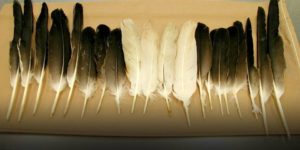
Over the last 10 years, the repository has seen a 55% increase in the number of incoming bald eagles which correlates with the increase in nesting pairs in the U.S. Eagles sent to the repository for various reasons including collisions with either vehicles or powerlines and lead poisoning. In Alabama, the majority of eagles Alabama DWFF retrieve are a result of vehicular collisions. Once in hand, biologists collect all the necessary information on how, where, and when the bird died, then catalog that information on specific tags that get placed on the eagle’s leg, and mail the tagged eagle to the repository.
So, while it may seem like an eagle’s story ends at death, with the National Eagle Repository, their story continues in the traditions of Native Americans for generations to come. Learn more about the recovery story of bald eagles in Alabama on the Outdoor Alabama website.
Media Release/Alabama Department of Conservation and Natural Resources

