
LOUISVILLE, KY – Today, the Alabama Emergency Management Agency (AEMA) in
partnership with Climavision, the weather technology company whose private radar network and AI-
driven forecasting fills visibility gaps across the country, announced a partnership to integrate gap-filling
weather radar data into EMA operations across the state to provide more accuracy and lead time during
severe weather events. The partnership will provide AEMA and local emergency managers with visibility
into weather conditions in regions that were previously unobservable, and therefore vulnerable to
unpredictable weather events.
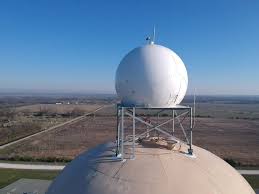
Working in Alabama since 2021, Climavision operates three of its radars in areas historically considered
“radar gaps” – or large swathes of land where lower atmospheric regions aren’t observed at all.
Emergency managers across the state will now have access to data from these radars so they can
respond to critical weather events in regions they once couldn’t monitor. The initiative reflects a
growing approach among states seeking to modernize situational awareness through public-private
collaboration without assuming the cost or complexity of owning and operating radar infrastructure.
The National Weather Service (NWS) relies on its nationwide NEXRAD radar network to provide the
backbone of U.S. weather forecasting and situational awareness. While NEXRAD delivers critical upper-
level coverage, many regions, including parts of Alabama, remain underserved at lower altitudes where
severe weather impacts communities most directly. Approximately 130 million U.S. citizens live in
visibility gaps where weather conditions close to the ground aren’t measured by existing NEXRAD radars.
State and local emergency managers in many areas have historically been forced to rely on distant radar
coverage, limiting their ability to assess rapidly evolving threats in their own jurisdictions. In the last
three years, Climavision has worked collaboratively with NWS to provide data that addresses these gaps.
Like Alabama, many states are looking to fill them through public-private partnerships that provide a
cost-effective, efficient way to shorten radar installation timelines and cover burdensome costs, such as
ongoing infrastructure maintenance.
In Alabama specifically, Climavision’s radars fill gaps across one of America’s most widely recognized
observational gaps in the southwest portion of the state, an area particularly vulnerable to severe
weather but historically lacking hyper-local radar coverage Previously, access to radar data was limited
to the local counties where the systems were deployed. Through this statewide integration, those
insights are now available to AEMA, informing the allocation of public safety resources, operational
coordination, and communication with vulnerable populations across Alabama.
“Our responsibility is to ensure every community in Alabama—urban and rural—has access to the same
level of situational awareness when severe weather threatens,” said Jeff Smitherman, Director of the
Alabama Emergency Management Agency. “Closing coverage gaps takes partnership across federal,
state, county, and private-sector teams, and this approach allows us to do that in a way that is both
collaborative and fiscally responsible.”
Climavision operates under a service-based model that addresses the limitations of ad hoc gap-filling
efforts. The company owns, operates, and maintains its radar systems, working with local and state
partners to strategically site installations. Supplemental radar observations are integrated into existing
forecasting and emergency management workflows, allowing agencies to enhance situational
awareness.
“Weather planning and response requires tight communication and coordination with federal, state, and
local partners,” said Tara Leigh Goode, Climavision’s Head of Radar Operations and Strategic
Partnerships. “This exciting partnership with AEMA demonstrates how we can all work together to
accelerate innovation and solutions in the interest of a safer, more resilient nation. We’re grateful to
AEMA for their leadership in disaster preparedness and proud to partner with them.”
“The first phase of this effort focused on deploying the physical infrastructure needed to observe
weather where it previously couldn’t be seen,” said Chris Goode, Co-Founder and CEO of Climavision.
“This next phase — making that data accessible statewide — shows how states can responsibly
modernize their weather readiness. Alabama’s approach demonstrates what’s possible when state
leadership, local partners, and federal systems work together, and we expect this model to become
increasingly relevant as weather risks continue to intensify.”
With an optimal range of 60 miles and up to 10x the resolution of standard NEXRAD S-band radars,
Climavision radar systems provide high-fidelity observations critical for severe weather monitoring. In
addition to Alabama, Climavision’s network fills visibility gaps in 13 other states: Arkansas, Georgia,
Kentucky, Louisiana, Minnesota, Mississippi, Missouri, North Carolina, Oklahoma, Kansas, Pennsylvania,
Tennessee, and Texas. The company will expand to Florida this year. All radar systems are safe and
licensed by the Federal Communications Commission (FCC).
Media Release/Bill Shory/Fleur de Lis Communications

