
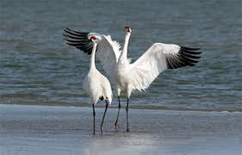
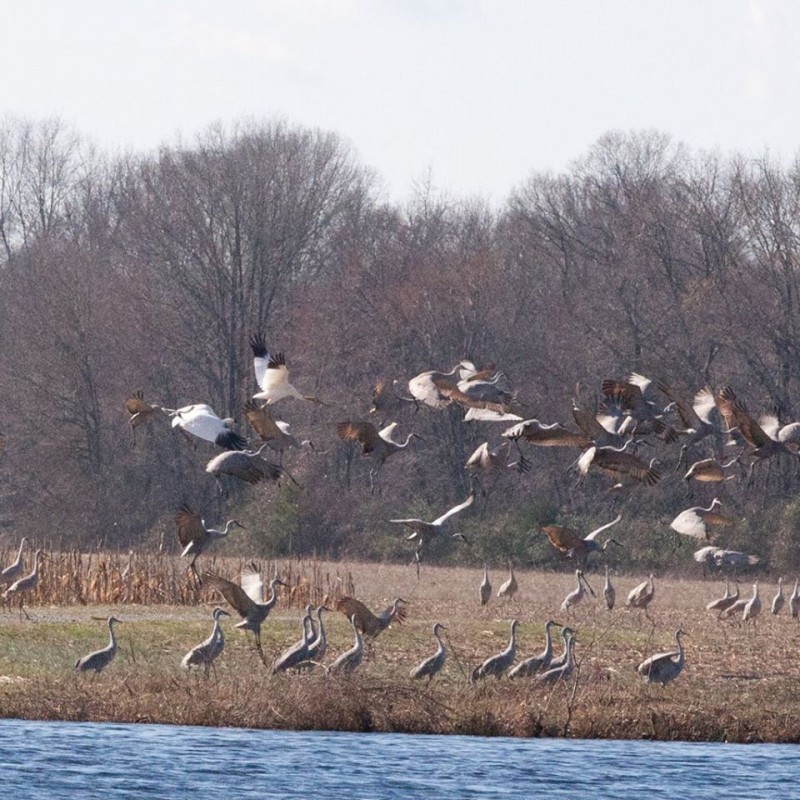
Whoopers and Sandhills at Wheeler Nation Wildlife Refuge
MONTGOMERY-Two species of cranes occur in Alabama at certain times of the year. While sandhill cranes are more common and can be seen during the winter months in north Alabama, there are also opportunities to see endangered whooping cranes in the state. Whooping cranes, sometimes confused with sandhills, are tall, solid white birds with dark red crowns and mustache stripes on their faces. Sandhill cranes are slightly smaller, ashy gray in color and have a red crown but lack the red mustache. The bills of sandhills are also black, while whooping cranes have a thick pink and gray bill. Viewed individually, they may be hard to identify, but when seen together, identification is much easier.
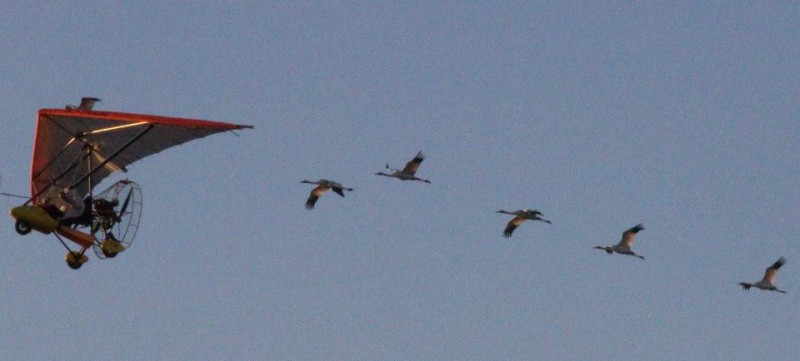
Whoopers following the Ultra Light
The story of the whooping crane, the tallest bird in North America, is most impressive. Whooping cranes were on the brink of extinction in the 1940s with a population of fewer than 20 wild birds. Thanks to the efforts of several conservation groups, there are now almost 600 birds, with around 100 of those making up the Eastern migratory population. These special birds are part of an experimental population that starts with captive-reared eggs from Maryland, Wisconsin and Alberta Canada each year. Once hatched, they are transported to Wisconsin where they are raised by handlers. All precautions are taken to make sure these birds maintain their wild instincts and do not imprint on humans. Each handler wears a “crane outfit” − clothing that disguises them − so that the birds identify the handler one of their own. Known as Operation Migration, pilots in crane outfits then lead the young whoopers with ultralight planes on a migration path from Wisconsin to their wintering grounds on the Gulf Coast of Florida. This path leads straight through Alabama.
 Operation Migration volunteers maintain a daily online blog throughout the fall migration process to keep viewers informed of the cranes’ progress (www.operationmigration.org/
Whenever encountering these migrating birds, it is important not to get too close or harass them. Never try to approach or feed these 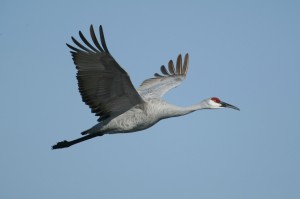 birds as there has been extreme caution taken to maintain their wild nature and it is important that they do not depend on humans for food. If you do encounter any whooping cranes outside of the refuge during the fall or spring months, it is also important to report the information. If you see any adult birds with color-coded leg bands, those color combinations can help identify which individual bird you are seeing so their survival and migration can be tracked. The color bands can usually be seen with binoculars from a safe distance so as not to spook the birds. Information on the leg band color combinations and location can be reported directly to the Fish and Wildlife Service atwww.fws.gov/midwest/
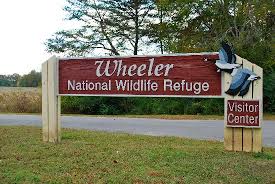 During the winter, there is a perfect opportunity to see whooping cranes in Alabama. Wheeler National Wildlife Refuge near Decatur now hosts around 15 whooping cranes each year during the winter months. Nine of these birds make up the class of 2011 from Operation Migration. During the ultralight-led migration that year, there were complications encountered that grounded the group in north Alabama for over a month. With the delay in migrating as well as the mild Alabama winter that year, it was decided to move the cranes to the refuge and release them with a group of whooping cranes already there instead of trying to continue on to Florida. Those young birds found themselves in Alabama again this past winter spending their time on the refuge with the same group of older birds that have made Wheeler their winter home. Along with the whooping cranes, you can also have the opportunity to see thousands of sandhill cranes while at the refuge.
There aren’t many states where you can see both species of cranes at one time. People come from all over during the winter to see these birds that are right here in our backyard. This winter is a perfect time to introduce a child to birding and these two types of cranes.
MEDIA RELEASE/ALABAMA DEPARTMENT OF CONSERVATION AND NATURAL RESOURCES/By Carrie B. Threadgill, Wildlife Biologist, Alabama Division of Wildlife and Freshwater Fisheries

