
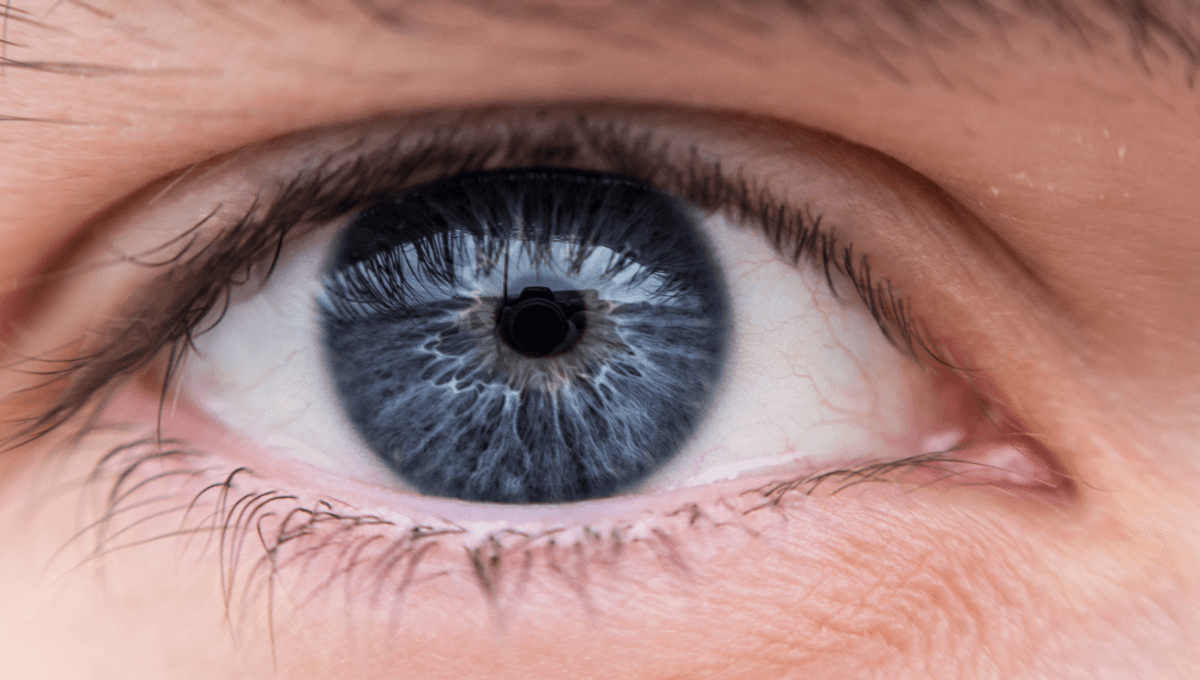
If you look closely in the mirror at the inside corner of either of your eyes, you’ll notice a pinkish protuberance. This thin, curved membrane sits directly adjacent to the eyeball and is called the plica semilunaris, which is an evolutionary remnant of the nictitating membrane, known colloquially as the “third eyelid.” (This is not to be confused with the lacrimal caruncle, a tiny bump at the very edge of the eye that helps keep the eye moist.)
Many animals, including dogs, cats, and some birds, reptiles, and fish, still have a functioning nictitating membrane. This translucent membrane protects the eye while still allowing the animal to see, and also essentially acts like a windshield wiper by removing debris and maintaining moisture. Birds rely on their nictitating membrane while in flight, and fish use it while swimming. But its purpose in prehistoric humans remains unclear due to the lack of definitive fossil records.
In fact, the third eyelid is believed to have lost its usefulness in humans long before the first appearance of Homo sapiens roughly 300,000 years ago. This is due to relaxed selection — an evolutionary phenomenon wherein formerly advantageous traits become less prominent with infrequent use. However, these traits can continue to physically stick around if they don’t actively hinder survival. The plica semilunaris is an example of one of these vestigial structures — a useless, harmless feature that shrunk but never fully disappeared.
Media Release/InterestingFacts

