
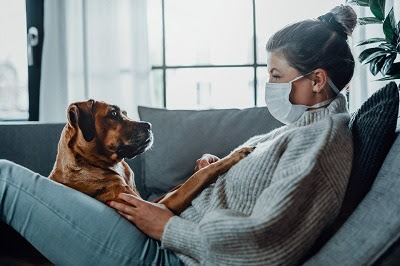
 ATLANTA, GA-If your pet tests positive for the virus that causes COVID-19, isolate the pet from everyone else, including other pets. Do not wipe or bathe your pet with chemical disinfectants, alcohol, hydrogen peroxide, or other products, such as hand sanitizer, counter-cleaning wipes, or other industrial or surface cleaners.
- If your pet tests positive for the virus that causes COVID-19, isolate the pet from everyone else, including other pets.
- Only a few pets have been confirmed to be infected with the virus that causes COVID-19. Some pets did not show any signs of illness, but those pets that did get sick all had mild disease that could be taken care of at home. None have died from the infection.
- If you think your pet has COVID-19, call a veterinarian first to discuss what you should do.
- Pets with confirmed infection with the virus that causes COVID-19 should be restricted to isolation in the home until a veterinarian or public health official has determined that they can be around other pets and people.
We are still learning about how the virus that causes COVID-19 can affect animals. A small number of pets (cats and dogs) have been confirmed to be infected with the virus that causes COVID-19, mostly after close contact with a person with COVID-19. Some pets did not show any signs of illness, but those pets that did get sick all had mild disease that could be taken care of at home. None of the pets have died. Tests for COVID-19 in animals are available for most types of pets, but testing is only recommended for animals with COVID-19 symptoms and that have been exposed to a person with COVID-19.
Based on the limited information available now, the risk of pets spreading COVID-19 to people is considered to be low. There is no reason to abandon or surrender pets that have been confirmed positive for the virus that causes COVID-19.
If your pet is tested for COVID-19 and is confirmed to be infected
Depending on how sick your pet is, your veterinarian may recommend that your pet be isolated at home, instead of staying in the hospital. Some pets did not show any signs of illness, but those pets that did get sick all had mild disease that could be taken care of at home.
If your veterinarian recommends home isolation and you are able to care for your pet at home, follow this advice to protect yourself and others.
When it is safe for your pet to be around others: ending home isolation
Follow your veterinarian’s advice for when it is safe for your pet to be around other people and animals. Some pets may need follow-up testing to see if they are still positive for the virus that causes COVID-19. Monitoring, isolation, and movement restrictions can end for positive pets if:
- The animal has not shown clinical signs consistent with SARS-CoV-2 infection for at least 72 hours without medical management;
AND one of the following conditions:
- It has been at least 14 days since their last positive test from a lab that uses a validated SARS-CoV-2 RT-PCR diagnostic assay;
OR
- All sample types collected at follow-up are negative by a validated SARS-CoV-2 RT PCR diagnostic assay.
Media Release/CDC

