

 ATLANTA-CDC continues to study the spread and effects of the novel coronavirus across the United States. We now know from recent studies that a significant portion of individuals with coronavirus lack symptoms (“asymptomatic”) and that even those who eventually develop symptoms (“pre-symptomatic”) can transmit the virus to others before showing symptoms. This means that the virus can spread between people interacting in close proximity—for example, speaking, coughing, or sneezing—even if those people are not exhibiting symptoms. In light of this new evidence, CDC recommends wearing cloth face coverings in public settings where other social distancing measures are difficult to maintain (e.g., grocery stores and pharmacies) especially in areas of significant community-based transmission.
It is critical to emphasize that maintaining 6-feet social distancing remains important to slowing the spread of the virus. CDC is additionally advising the use of simple cloth face coverings to slow the spread of the virus and help people who may have the virus and do not know it from transmitting it to others. Cloth face coverings fashioned from household items or made at home from common materials at low cost can be used as an additional, voluntary public health measure.
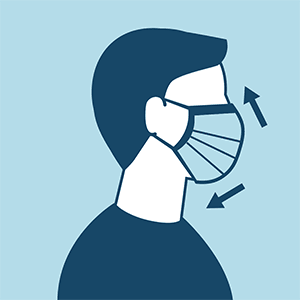
How to Wear Cloth Face Coverings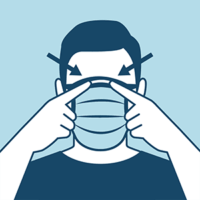
Cloth face coverings should—
• fit snugly but comfortably against the side of the face
• be secured with ties or ear loops
• include multiple layers of fabric
• allow for breathing without restriction
• be able to be laundered and machine dried without damage or
change to shape
CDC on Homemade Cloth Face Coverings
CDC recommends wearing cloth face coverings in public settings where other
social distancing measures are difficult to maintain (e.g., grocery stores and
pharmacies), especially in areas of significant community-based transmission.
CDC also advises the use of simple cloth face coverings to slow the spread of
the virus and help people who may have the virus and do not know it from
transmitting it to others. Cloth face coverings fashioned from household
items or made at home from common materials at low cost can be used as an additional, voluntary public health measure.
Cloth face coverings should not be placed on young children under age
2, anyone who has trouble breathing, or is unconscious, incapacitated or
otherwise unable to remove the cloth face covering without assistance.
The cloth face coverings recommended are not surgical masks or N-95
respirators. Those are critical supplies that must continue to be reserved for
healthcare workers and other medical first responders, as recommended by
current CDC guidance.
Should cloth face coverings be washed or otherwise
cleaned regularly? How regularly?
Yes. They should be routinely washed depending on the frequency
of use.
How does one safely sterilize/clean a cloth face covering?
A washing machine should suffice in properly washing a cloth face covering.
How does one safely remove a used cloth face covering?
Individuals should be careful not to touch their eyes, nose, and mouth
when removing their cloth face covering and wash hands immediately
after removing.
Media Release/Centers for Disease Control and Prevention

