
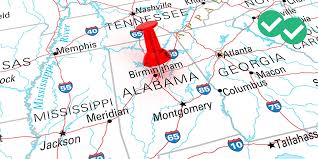
While many countries have geographical differences in accents (for example, a posh London accent versus the rough-and-tumble Cockney accent), America’s various accents are particularly pronounced. A person from Boston speaks differently than a person from New York City, despite their relative geographic closeness, to say nothing of the difference between Midwestern and Southern accents. While all of these are American, the roots of the Southern drawl have a unique colonial history. Let’s examine what makes this distinctive accent so quintessentially American.
Where the Southern Drawl Came From
Call it a drawl or a twang, but one of the primary hallmarks of Southern American English (SAE) is a melodic, relaxing quality. A marketing firm conducted a survey of global English accents, and the Southern accent was voted the most pleasant. (New York and Boston accents were voted the least pleasant — sorry, New Englanders.) 
Some may attribute this laid-back melody to the slower, more relaxed pace of life the South is supposed to have compared to northern regions, but there’s more at play. The specific qualities of the Southern accent (and all accents) developed through the intersection of cultural exchange, geography, and evolving linguistics.
Importantly, there is more than one type of accent within SAE — Texans sound different than Virginians, who sound different than Louisianans. But they all share an origin story in the mingling of British colonists and enslaved Africans.
The final “r” sound in words such as “four” and “here” is very important to linguists. If speakers drop the final “r,” that’s called “non-rhotic” as opposed to “rhotic,” wherein the “r” is pronounced. In the mid-1700s in the plantation system, using non-rhotic speech to match upper-class British accents was considered “prestigious” speech (“prestigious” being a way linguists classify certain accents as culturally preferred over others).
As accents have changed over time, it’s more common now for white Southerners to pronounce the final “r” and use rhotic speech and for Black Americans everywhere to use non-rhotic speech. In Southern states outside of the former plantation system, it’s more common to use rhotic patterns.
The so-called “Southern drawl” can also be explained in linguistic terms. The stretched-out sounds come from vowels — a diphthong is when a vowel shifts from one sound to another. For example, in the word “boy,” the “o” sound shifts into an “i.” The Southern accent prominently features monopthongization, which is when a diphthong, or two-part vowel sound, is flattened into a single vowel sound.
In a recorded example from a University of Georgia linguist, you can hear how the word “five” changes from a standard diphthong (with an “i” transitioning to an “ee,” as in “me”) to a monophthong in SAE. “Five” is flattened into an elongated “ah” vowel sound.
Finally, the Southern accent is marked by unique lexical choices and grammatical variations — a Southerner might say “I reckon” or “I might could” instead of “I might be able to.” (For further examples of this, we recommend Instagram personality Landon Bryant, who makes learning Southern slang and lexicon as easy as drinking a glass of sweet tea.)
Southern Accent Variations
The Tidewater accent, which sounds particularly gentle and rhythmic, is rooted in early British settlers, and can be found in pockets of Virginia and North Carolina. It has non-rhoticity and a glide in long “i” sounds (“ride” sounds like “royd”).
The Piedmont accent is found in more urban areas than coastal regions. For example, the North Carolina cities of Charlotte, Raleigh, and Winston-Salem are known for Piedmont accents. It’s somewhat of a stereotypical Southern accent, differentiated by a subtle drawl, rhotic pronunciation of the letter “r,” and elongated vowel pronunciation (“cat” sounds more like “caat”).
The Appalachian accent is characterized by a Scotch Irish influence. It preserves certain aspects of Elizabethan English through distinctive pronunciations — for example, “like” sounds like “lack.” A musical quality comes from initial syllable stress, which is when the emphasis is shifted to the first syllable of a word.
The areas around the Gulf of Mexico (in particular, Louisiana) have French and Spanish influences, but we’re not talking about the distinct dialects of Louisiana French or Gullah. The SAE accent found in this region is distinctive for a specific vowel shift that linguists call the “PEN/PIN merger.” With this accent, both “pen” and “pin” are pronounced the same, with an “ih” vowel. Another example of this is how the word “feel” might be pronounced like “fill.”
The Texas accent, meanwhile, combines elements of Southern and Western English. A unique characteristic of the Texan accent is the “caught-cot merger,” which displays elements of nasality and sharpness. As with “pen” and “pin,” this linguistic merger makes “caught” and “cot” sound alike (along with other words with these vowel sounds).
This is just a brief overview of what makes SAE (and its many variations of Southern accents) so special, but any of the linguistic topics mentioned here have layers of nuance and study behind them. We reckon that’ll do it for now.
Media Release/Word Smarts

