
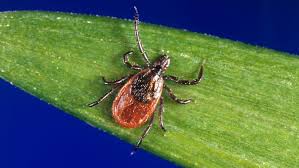
CHICAGO, IL-As the weather warms up and more people head outdoors, it’s not all sunshine and rainbows. There is an ongoing threat of ticks in certain areas when enjoying time in nature or even just in your backyard. Some of these ticks can transmit Lyme disease, a tickborne infection caused by the bacteria Borrelia burgdorferi, that can present with a bullseye rash as an early symptom.
Usually, Lyme disease is resolved completely with a short course of antibiotics. But Lyme disease is not always a simple illness. It can cause prolonged symptoms if left untreated and sometimes even despite effective treatment, a phenomenon which is not well understood.
yme disease is the most common vector-borne disease in the U.S., with an estimated 476,000 people diagnosed and treated each year, according to the Centers for Disease Control and Prevention (CDC). Meanwhile, the economic burden of Lyme disease in the U.S. is between $345 million and $968 million each year. And the average patient cost is about $1,200 per infection. Patients with later stages of Lyme disease have double the costs, according to the CDC. This makes prevention, early diagnosis and treatment key to reducing illness and cutting costs.
Not all ticks carry Lyme disease
“Lyme disease is a bacterial infection transmitted by ticks,” said Dr. Duckro, noting that “only certain types of ticks carry the disease. These specific tick species are found in different parts of the country.
“In the U.S., Lyme disease is mainly transmitted by Ixodes scapularis—the ‘deer tick.’ On the Pacific Coast, Ixodes pacificus is the species of tick that carries the bacteria that causes Lyme disease,” she added. “The symptoms and effects of the infection are pretty much the same, regardless of the etiology of Lyme disease and the place of exposure.”
Tick season differs across the U.S.
As the climate warms, ticks are becoming more active in winter months. Even just a temporary rise in temperatures during the winter months can invite ticks to come out of hiding. Climate change has also expanded the habitat where ticks live and thrive with Lyme disease nearly doubling since 1991.
“Lyme disease is a geographic illness that’s most common in the New England, mid-Atlantic states, also in the upper Midwest,” Dr. Auwaerter said. “But it’s spreading to new areas where people may not be as familiar, like spreading down the Shenandoah Mountains in Virginia, for example, or across into Ohio, Northern Indiana and Michigan.”
While “Lyme disease is most common in the Northeast, mid-Atlantic states and the upper Midwest,” said Dr. Duckro, “ticks that carry Lyme disease are also found in the West Coast—in California and the Pacific Northwest.”
Additionally, “tick exposure can occur year-round, but ticks are most active in warmer months,” she said.
“Now, obviously, during the winter, ticks are not always active, but here in Maryland, I’m often surprised because I’ve had people with tick bites all months of the year,” Dr. Auwaerter said. “If the weather is warm, the ticks stir. And if you’re outdoors, you can get a bite.”
“It’s pretty rare in January and February, but it’s possible from March onwards through November and December. The peak months for developing Lyme disease—at least in most of the United States—will be June and July,” he said. People can check local tick activity by exploring CDC’s interactive Tick Bite Tracker.
A bullseye rash is an early symptom
“Early signs can include a bullseye rash, fever, headache, fatigue or flu-like symptoms,” Dr. Duckro said. “Sometimes people have muscle or joint aches.”
“The rash, which is fairly characteristic,” Dr. Auwaerter said, “is this bullseye rash that typically is a single spot where the tick attached and rapidly expands in a pink oval process sometimes having central clearing.
“And it can grow over two and a half inches or even much larger over a period of time and occasionally cause other spots on the skin,” he added. “But the rash of Lyme disease doesn’t always look like the classic bullseye—frequently it can be a solid pink to red patch and often ovoid with a raised spot at the site of where the tick bite occurred. Sometimes if the infection continues, multiple spots occur over the body often accompanied by fever and flu-like symptoms.”
Lyme disease transmission occurs within 72 hours
“One important thing to keep in mind is that the tick usually needs to be attached to the body for more than 24 hours to be able to transmit Lyme disease,” Dr. Duckro said. “If the tick is removed intact earlier than this, it is unlikely for Lyme to be transmitted.”
“So, if you come home and find the tick right away, it’s not a big deal. You’ve done your job. Great. Keep it up,” Dr. Kaufman West added. “But if after a couple days you find a big, swollen tick on your hip, that’s when you should contact your physician and see if there’s anything that you should do.”
Additionally, “some people don’t notice the tick bite ever and a few days later after hiking they’ll see that bullseye rash,” Dr. Kaufman West said. “That might be early Lyme disease and there are antibiotics that you can take for that.”
Bug bites can be prevented
“The best way to protect against Lyme disease is to prevent tick bites,” said Dr. Duckro.
Many people think “that any bug bite is a part of life,” Dr. Kaufman West said, noting “I grew up that way, thinking you’re just going to get mosquito and tick bites and that is what it is, but you don’t have to get bit.”
“It doesn’t have to be a part of summer. There are things that you can do to help prevent bites and prevention is always better than treating,” she said.
“Ticks live in grassy or wooded areas. You can reduce the risk in your yard by removing leaf litter and clearing tall grasses and brush,” Dr. Duckro said.
It is also important to note that “even though antibodies develop after Lyme disease, reinfection can occur with additional exposures,” she said. That is why “it’s best to try to avoid exposure to ticks in the first place, whenever possible.”
Wear appropriate clothing
“Wearing long sleeves and pants—they can be lightweight because obviously if it’s warm out, you might not want to be burdened by a big sweatshirt—is important,” Dr. Kaufman West said. Beyond long sleeves and long pants, it is also important to wear “appropriate shoes for being outside. So, not sandals. Wear gym shoes or something with a closed toe.”
Also, “tuck your pant trousers in your socks. You may look a little nerdy, but the ticks can’t get in then,” said Dr. Auwaerter, noting, “there are a number of those maneuvers that are helpful on a day-to-day basis when you’re outdoors gardening or hiking and so on.”
Use insect repellent
“Wearing the appropriate tick repellent can also help prevent tick bites. Whether that’s impregnated on the clothes or spraying it on at appropriate intervals,” Dr. Kaufman West said, noting “there are a lot of Environmental Protection Agency resources on what is a good tick repellent.”
“You can spray yourself with repellents such as DEET and there are a variety of other ones such as picaridin that are all effective,” Dr. Auwaerter said. But “some need reapplication if you’re outside for a long time.
“Then permethrin is a substance you can spray on clothing. It’s what the U.S. army uses to keep ticks off them when they’re in the field,” he added.
Additionally, “if you are using sunscreen, also, apply the sunscreen first and allow it to dry, then apply the insect repellant,” Dr. Duckro said.
Perform a tick check
“The most important tick protection is a tick check. And that is, after you’re outdoors, inspect your whole body carefully,” Dr. Auwaerter said. “And, especially in some areas, have a partner who can look at your back and other areas where you may not be able to see very well.”
That means “stripped down and looking in areas where the clothing stays close to the body, so belt lines, near the wrists and ankles where your socks might be,” Dr. Kaufman West said. “Then the hairline—around the ears and in the back. And especially if you have long hair, make sure that you check throughout the hair.”
“You should also check your clothing for ticks after outdoor activities. Showering soon after coming indoors can help wash off unattached ticks,” Dr. Duckro said, emphasizing that “removing a tick promptly helps prevent infection with Lyme disease.”
Remove attached ticks as soon as possible
“If you find a tick attached to you, the tick should be removed as soon as possible,” Dr. Duckro said, noting “there is a specific way to remove a tick to make sure all parts of the tick come out of the skin.
“Using fine-tipped tweezers, grasp the tick as close to the skin as possible, then pull gently upwards with steady, even pressure,” she added. “You don’t want to twist the tick when pulling it out. This can cause parts of the tick to break off and remain in the skin.”
“You really want to try to remove ticks, if possible, within 36 hours of attachment because that’s the time it takes for Lyme disease bacteria to be effectively transmitted,” Dr. Auwaerter said. “If the tick has been attached for less, if it doesn’t look very engorged—meaning swollen with blood—it’s less likely that it has a capability of resulting in Lyme disease.”
“After removing the tick, clean the bite area and your hands with rubbing alcohol or soap and water,” Dr. Duckro said.
“If you find a tick and you pull it off right away, great, you’ve prevented the bulk of what we would worry about,” said Dr. Kaufman West.
There is also the possibility that other pathogens can be transmitted in less time, so removing ticks as soon as possible is crucial. If you develop symptoms after getting bitten by a tick, be sure to go to your doctor immediately for evaluation and mention your recent tick bite.
Know when to contact your doctor
“If you have been in an area where Lyme disease occurs and you have found a tick on your skin that is engorged or has been attached for more than 24 hours,” said Dr. Duckro, “you should contact your doctor to ask about an antibiotic to prevent Lyme disease.”
Also “talk with your doctor if you develop symptoms after a potential exposure,” she said. “At times, people who have symptoms are not even aware they had a tick bite.”
Media Release/Sara Berg, MS
News Editor AMA

