
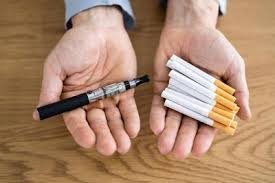
CHICAGO, IL-HealthDay reports, “It’s beside the point to debate whether vaping or nicotine pouches can be more healthy than smoking a cigarette, a major new report argues.” HealthDay says “nicotine is toxic to the heart and blood vessels regardless of how it’s consumed, according to an expert consensus report.” One researcher said, “Across cigarettes, vapes, heated tobacco and nicotine pouches, we consistently see increased blood pressure, damage to blood vessels and a higher risk of heart disease. … No product that delivers nicotine is safe for the heart.” The findings were published in the European Heart Journal.

What doctors wish patients knew about e-cigarettes
Clouds of vapor, sweetened with the scent of candy or mint, drift through the air. But behind the flavored haze, hidden dangers linger. E-cigarettes, once marketed as a safer alternative to smoking, have found a stronghold among teens and adults alike.
Yet physicians are sounding the alarm: vaping is far from harmless. What many patients don’t realize is that even without the tar and smoke of traditional cigarettes, e-cigarettes carry serious risks to lung health, heart function and even brain development.
While vape use went down between 2023 and 2024, for the 11th year in a row, e-cigarettes have been the most commonly used tobacco product among middle- and high-school students. In 2024, about 2.25 million middle- and high-school students in the U.S. used at least one tobacco product, according to the Centers for Disease Control and Prevention.
This is alarming because tobacco use during adolescence increases the risk of lifelong nicotine addiction and adverse health outcomes. That is why the AMA adopted policy to decrease youth access to e-cigarettes.
The AMA’s What Doctors Wish Patients Knew™ series gives physicians a platform to share what they want patients to understand about today’s health care headlines.
In this installment, Bilal Shahid Bangash, MD, a pulmonologist and critical care physician at Bayhealth, discusses what patients should know about vaping or e-cigarettes.
Bayhealth is a member of the AMA Health System Program, which provides enterprise solutions to equip leadership, physicians and care teams with resources to help drive the future of medicine.
It usually contains nicotine
“Vaping is an act of inhaling and exhaling aerosol, which is referred to as vapor,” said Dr. Bangash. “The aerosol or vapor is found in devices such as an e-cigarette which is also referred to as a “vape”.”
“The liquid found in e-cigarette and vape cartridges usually contains nicotine,” he said. “Interestingly, devices which claim to be “nicotine free” still contain a small quantity of nicotine.
Chemicals are also found in vapes
“These devices contain other chemicals in addition to nicotine. One of the most common ingredients is a chemical called propylene glycol, which is a common additive in food,” said Dr. Bangash, noting “it may also be used to make antifreeze, paint, solvents and artificial smoke.
“Additionally, there are flavoring and other unknown chemicals and ingredients,” he added, noting “it is believed when the liquid heats up, it produces further toxic chemical release.”
Vaping affects your health
“There’s already proven evidence that youth or adolescents who use e-cigarettes are at an increased risk of short-term lung disease,” Dr. Bangash said. “Those patients who have asthma or chronic obstructive pulmonary disease may experience increased coughing, wheezing and flare-ups.”
“The same body of evidence also suggests long term complications including lung disease,” he said, noting “some e-cigarettes and vapes may contain higher nicotine quantities than a regular cigarette. Therefore, at times it is like smoking an entire pack of cigarettes in terms of nicotine consumption.
Your lungs are at risk
Vaping still puts your lung health at risk, said Dr. Bangash, noting “there’s evolving evidence of the impact of e-cigarettes on the lungs and the health risks associated with it.”
“These risks are due to the fact that it contains and emits a number of potentially toxic substances,” he said. “As I mentioned before, the nicotine within the e-cigarettes and vapes is synthetic and as the vapor or the liquid heats up, it produces a lot more toxic chemicals, which cause a variety of lung problems.”
Brain development is affected
“Unfortunately, e-cigarettes and vapes are predominantly seen within the youth,” said Dr. Bangash, noting “the brain is still developing until your early- to mid-20s.
“When nicotine is consumed during the period of brain development, it can lead to long-lasting effects because it dysregulates some of the neuronal circuits in the brain that affect control, attention, impulse and mood,” he added.
Vaping can be addictive
E-cigarettes and vapes “all stem from nicotine, which is a highly addictive substance. When you vape nicotine, it does the same—it dysregulates activity in several parts of the brain,” Dr. Bangash said, noting “it can affect neuronal pathways.”
“The end result is, all of those changes in the brain make nicotine more desirable,” he added. “So, vaping can cause a similar pattern of addiction or sometimes even worse as compared to cigarettes.”
“It’s difficult to assess how long it takes, but usually once someone starts consuming nicotine and does it on a daily basis for over at least two or three months, that’s when one starts to develop some brain and neuronal changes which make it really hard to quit e-cigarettes and vaping of nicotine.”
Quitting can be difficult
When it comes to quitting e-cigarettes or vapes, “it can be as difficult as quitting smoking because both involve nicotine addiction,” Dr. Bangash said. “However, the interesting thing is that the vaping devices deliver nicotine a lot more easily and discreetly, which makes it even more challenging to quit.”
“As a result of the ease of using vaping devices, one ultimately ends up vaping more frequently leading to an increased consumption of nicotine than with traditional cigarettes; which makes it that much harder to quit,” he said.
Vaping not shown to help you quit
The notion that e-cigarette use is without risks is unfounded, Dr. Bangash said. “As stated before, they are just as addictive and with the same or additional risk of lung injury as traditional cigarettes.”
“No e-cigarettes or vapes have been found to be safe and effective by the” Food and Drug Administration (FDA) in helping smokers quit”, he emphasized.
“Another major misconception is that switching to e-cigarettes or vaping is a way to quit smoking traditional cigarettes,” said Dr. Bangash. “Using any other tobacco product or any other product that contains nicotine is not actually quitting.”
Which “is why e-cigarettes and vapes are not FDA-approved as a way to quit,” he said.
Many people have questions about the effects of secondhand smoke from e-cigarettes and vape pens, which is “a good question” to ask, said Dr. Bangash. Unfortunately, “the long-term harm from secondhand vape smoke is not well understood.”
“However, the aerosol from vape smoke does contain nicotine, heavy metals and formaldehyde, which in the short term can cause bronchitis, asthma flares and worsening breathing over time,” he said.
Have a quit plan
“The most important thing when planning to quit vaping or smoking cigarettes, is to have a quit plan,” Dr. Bangash said. “In order to help with the quit plan, talk to your doctor who can help develop a quit plan which can include medication and counseling.
“Together, the combination of medication and counseling has resulted in very high success rates of quitting for good,” he added. “There are also Quit Lines where patients can talk to trained “quit” coaches to help assist in this process and motivate patients to continue with their quit plan.”
It is also important “to understand with vaping, just don’t switch. Quit tobacco for good,” Dr. Bangash said. “We know from all the evidence and data around cigarette smoking is that quitting smoking is the single best thing to improve overall health.”
“It’s important to not get confused by unproven claims made by tobacco and e-cigarette companies. Just quit smoking for good and if you need assistance or help, please talk to your doctor,” he added. “And as a parent, please take it upon yourselves to educate your children about the hazards of smoking and be a positive influence for your kids and establish a smoke-free home.”
Learn more from the AMA about e-cigarettes and the public health epidemic of vaping.
AMA Morning Rounds

