
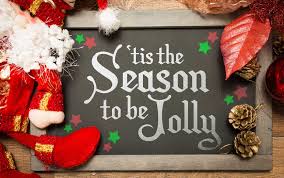
December brings together many traditions and cultures — it’s a time to include everyone in the festivities, and there’s language to do that. ’Tis the season for holiday phrases: Carols, decorations, and greeting cards are wishing “happy holidays,” “good tidings,” and a seemingly infinite number of other festive expressions. Some Christmas phrases come from Old English, while other salutations are 20th-century inventions. Let’s take time to explore the history behind some of these seasonal sayings so that you can have an even merrier and informed holiday season.

“Good tidings we bring to you and your kin. We wish you a Merry Christmas and a Happy New Year.” This Christmas carol line is popular on greeting cards throughout the season, but what are “good tidings”? By definition, the phrase is a way to say “good news.” In the classic carol “God Rest Ye Merry Gentlemen,” the line “tidings of comfort and joy” has the same general meaning. “Glad tidings” can be used interchangeably with “good tidings.” The word “tidings” stems from the Old English tidan, which meant “to happen.”

The phrase “happy holidays” is a relatively new invention. The Camel cigarette brand is credited with popularizing it as a wintertime phrase in a 1937 holiday ad that proclaimed, “A gift of Camels says, ‘Happy Holidays and Happy Smoking!’” Before then, the expression was used primarily in British English to refer to summer vacation from school. The word “holiday” itself is much older, though. Its etymology can be traced back centuries to the Old English word haligdaeg, which meant “holy day” or “religious festival.” Since there are several holidays that occur in or around the month of December, it’s a useful secular catch-all phrase to wish folks well during the season.
Feliz Navidad
When singing “Feliz Navidad,” you are wishing someone a “merry Christmas.” The Spanish word feliz traces back to the Latin term felix, meaning “happy,” and Navidad is the Spanish word for “Christmas.” The spirited holiday song by the same name was written in 1970 by Puerto Rican singer-songwriter José Feliciano.
Trim the Tree
While you might get a trim at the barber before Christmas dinner in order to look your best, “trim the tree” doesn’t have anything to do with cutting the branches. Instead, it refers to decorating the tree. The use of “trim” to mean “decorate or adorn” was first recorded in the 1540s. The word stems from the Old English term trymian, which had many meanings, including “strengthen, arrange, prepare, or make ready.” A Christmas dinner might also include “trimmings,” meaning “garnishes or accompaniments.”
The More the Merrier
This common phrase refers to the company of many being more enjoyable than the company of a few. But that’s not the entire phrase. First recorded in 1530, the full expression is: “The more the merrier; the fewer, the better fare.” Essentially, more people may be more fun, but there will be more food with fewer people.

