
ATLANTA, GA-On Friday, April 26 the CDC, in partnership with the National Oceanic and Atmospheric Administration’s (NOAA) National Weather Service (NWS), launched a new Heat and Health Initiative to protect Americans from heat exposure. The new initiative has three resources, which combined give proactive actions people can take to protect themselves: stay cool; stay hydrated; know the symptoms.
First, the HeatRisk Forecast Tool, developed by both CDC and NOAA, provides a seven-day heat forecast nationwide that tells you when temperatures may reach levels that could harm your health. Second, CDC’s HeatRisk Dashboard, a consumer-friendly product, integrates the HeatRisk Forecast Tool data with other information, including details on local air quality, to inform the public on how best to protect themselves when outdoor temperatures are high and could impact their health. Third, newly developed CDC clinical guidance helps clinicians keep at-risk individuals safe when temperatures rise.
“Heat can impact our health, but heat-related illness and death are preventable,” said CDC Director Mandy Cohen, M.D., M.P.H. “We are releasing new heat and health tools and guidance to help people take simple steps to stay safe in the heat.”
More than two-thirds of all Americans were under heat alerts in 2023. Heat events are becoming more frequent and intense. A recent report from CDC found that daily emergency department visits because of heat-related illness in 2023 peaked in several regions over the warm-season months and, in those regions, remained exceedingly high for an extended duration. Heat can be especially dangerous for people with underlying health conditions.
HeatRisk Forecast Tool
CDC worked with NOAA’s NWS on the HeatRisk Forecast Tool, which is designed for public health audiences, including state and local health officials. The methodology created by CDC and NWS identifies health and temperature data to deliver a seven-day outlook for hot weather. The tool uses a five-level scale to indicate how risky the heat level is in a specific area. Each level uses a color and number to represent risks from heat exposure. Thresholds associated with health impacts are identified based on relationships between temperature and mortality using CDC-based data assets at the local-level. The tool then accounts for unique relationship differences between heat and health for a specific location, in different geographic areas, and at different times of year. This tool can help jurisdictions in planning their actions to extreme heat forecasts, by, among other activities, implementing their respective Heat Response Plans.
HeatRisk Dashboard
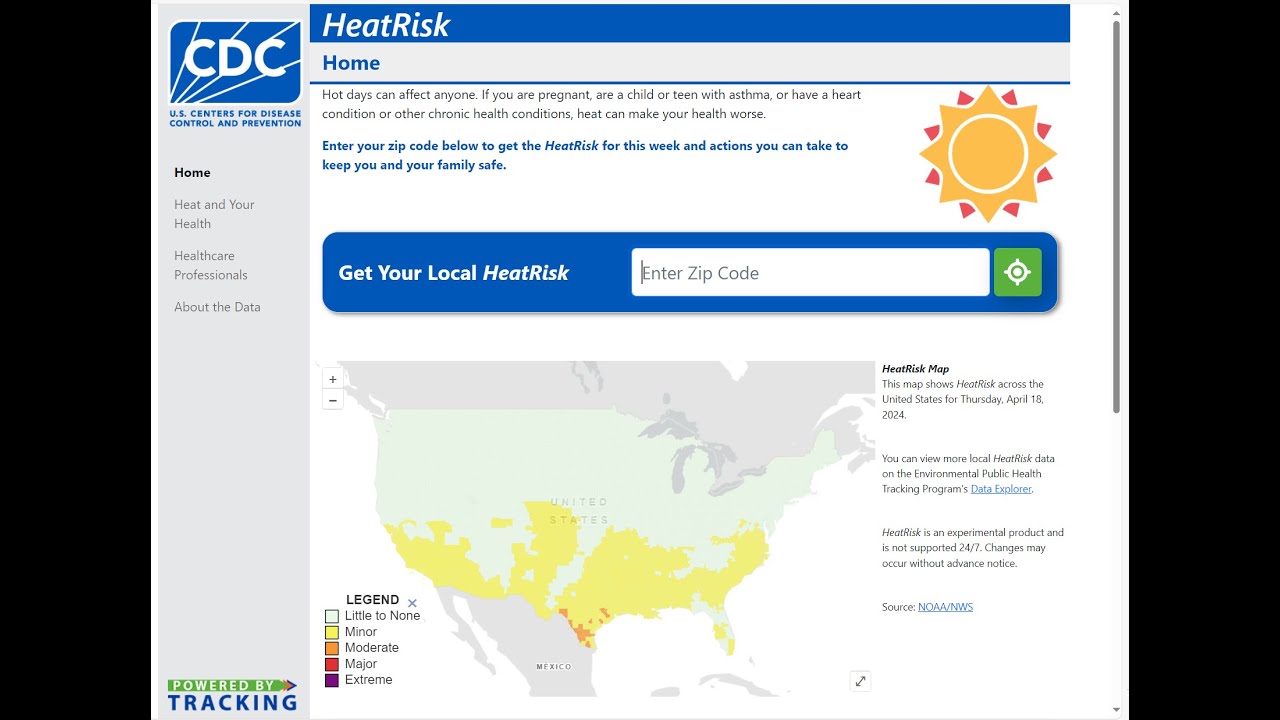
CDC’s HeatRisk Dashboard is designed for the general public. It allows people to access important heat and health information in an easy-to-use, intuitive, mobile-friendly interface. Pulling in data from the HeatRisk Forecast Tool, in the Dashboard people can enter their zip code and get personalized heat forecast information for their location alongside protective actions to take. The HeatRisk Dashboard is further supported by the U.S. Environmental Protection Agency’s AIR NOW Air Quality Index, which provides information on local air quality, specifically the presence of pollutants in the air. The Dashboard provides important heat and health information right alongside CDC’s new clinical guidance materials for people at higher risk from heat-related health effects who may need to take more protective actions.
Media Release/Centers for Disease Control and Prevention

