

Help Slow the Spread of COVID-19
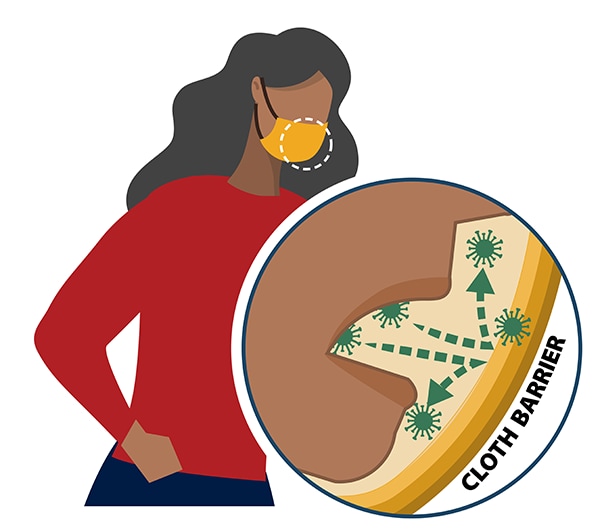
ATLANTA, GA-Cloth face coverings are recommended as a simple barrier to help prevent respiratory droplets from traveling into the air and onto other people when the person wearing the cloth face covering coughs, sneezes, talks, or raises their voice. This is called source control. This recommendation is based on what we know about the role respiratory droplets play in the spread of the virus that causes COVID-19, paired with emerging evidence from clinical and laboratory studies that shows cloth face coverings reduce the spray of droplets when worn over the nose and mouth. COVID-19 spreads mainly among people who are in close contact with one another (within about 6 feet), so the use of cloth face coverings is particularly important in settings where people are close to each other or where social distancing is difficult to maintain.
- CDC recommends that people wear cloth face coverings in public settings and when around people who don’t live in your household, especially when other social distancing measures are difficult to maintain.
- Cloth face coverings may help prevent people who have COVID-19 from spreading the virus to others.
- Cloth face coverings are most likely to reduce the spread of COVID-19 when they are widely used by people in public settings.
- Cloth face coverings should NOT be worn by children under the age of 2 or anyone who has trouble breathing, is unconscious, incapacitated, or otherwise unable to remove the mask without assistance.
Who Should Not Wear a Cloth Face Covering
Cloth face coverings should not be worn by:
- Children younger than 2 years old
- Anyone who has trouble breathing
- Anyone who is unconscious, incapacitated, or otherwise unable to remove the cloth face covering without assistance
Face Shields
It is not known if face shields provide any benefit as source control to protect others from the spray of respiratory particles. CDC does not recommend use of face shields for normal everyday activities or as a substitute for cloth face coverings. Some people may choose to use a face shield when sustained close contact with other people is expected. If face shields are used without a mask, they should wrap around the sides of the wearer’s face and extend to below the chin. Disposable face shields should only be worn for a single use. Reusable face shields should be cleaned and disinfected after each use. Plastic face shields for newborns and infants are NOT recommended.
Media Release/Centers for Disease Control and Prevention

