

 ATLANTA, GA-This interim guidance is based on what is currently known about the Coronavirus Disease 2019 (COVID-19). The Centers for Disease Control and Prevention (CDC) will update this interim guidance as needed and as additional information becomes available.
COVID-19 is caused by a new virus. There is much to learn about its transmissibility, severity, and other features of the disease. We want to help everyone prepare to respond to this public health threat.
Create a household plan of action
Talk with the people who need to be included in your plan. Meet with household members, other relatives, and friends to discuss what to do if a COVID-19 outbreak occurs in your community and what the needs of each person will be.
Plan ways to care for those who might be at greater risk for serious complications. There is limited information about who may be at risk for severe complications from COVID-19 illness. From the data that are available for COVID-19 patients, and from data for related coronaviruses such as SARS-CoV and MERS-CoV, it is possible that older adults and persons who have underlying chronic medical conditions may be at risk for more serious complications. Early data suggest older people are more likely to have serious COVID-19 illness. If you or your household members are at increased risk for COVID-19 complications, please consult with your health care provider for more information about monitoring your health for symptoms suggestive of COVID-19. CDC will recommend actions to help keep people at high risk for complications healthy if a COVID-19 outbreak occurs in your community.
Get to know your neighbors. Talk with your neighbors about emergency planning. If your neighborhood has a website or social media page, consider joining it to maintain access to neighbors, information, and resources.
Identify aid organizations in your community. Create a list of local organizations that you and your household can contact in the event you need access to information, health care services, support, and resources. Consider including organizations that provide mental health or counseling services, food, and other supplies.
Create an emergency contact list. Ensure your household has a current list of emergency contacts for family, friends, neighbors, carpool drivers, health care providers, teachers, employers, the local public health department, and other community resources.
Practice good personal health habits and plan for home-based actions
Practice everyday preventive actions now. Remind everyone in your household of the importance of practicing everyday preventive actions that can help prevent the spread of respiratory illnesses:
Avoid close contact with people who are sick.
Stay home when you are sick, except to get medical care.
Cover your coughs and sneezes with a tissue.
Clean frequently touched surfaces and objects daily (e.g., tables, countertops, light switches, doorknobs, and cabinet handles) using a regular household detergent and water. If surfaces are dirty, they should be cleaned using a detergent and water prior to disinfection. For disinfection, a list of products with Environmental Protection Agency (EPA)-approved emerging viral pathogens claims, maintained by the American Chemistry Council Center for Biocide Chemistries (CBC), is available at Novel Coronavirus (COVID-19) Fighting Productspdf iconexternal icon. Always follow the manufacturer’s instructions for all cleaning and disinfection products.
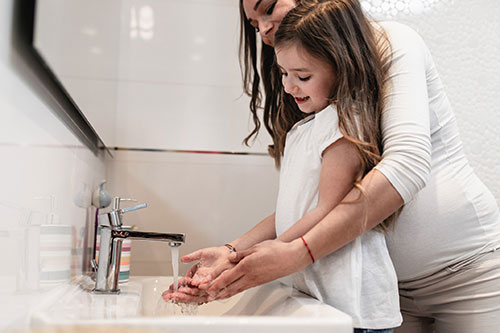
Wash your hands often with soap and water for at least 20 seconds, especially after going to the bathroom; before eating; and after blowing your nose, coughing, or sneezing. If soap and water are not readily available, use a hand sanitizer that contains at least 60% alcohol. Always wash your hands with soap and water if your hands are visibly dirty.
Choose a room in your home that can be used to separate sick household members from those who are healthy. Identify a separate bathroom for the sick person to use, if possible. Plan to clean these rooms, as needed, when someone is sick. Learn how to care for someone with COVID-19 at home.
Be prepared if your child’s school or childcare facility is temporarily dismissed
Learn about the emergency operations plan at your child’s school or childcare facility. During a COVID-19 outbreak in your community, local public health officials may recommend temporary school dismissals to help slow the spread of illness. School authorities also may decide to dismiss a school if too many students or staff are absent. Understand the plan for continuing education and social services (such as student meal programs) during school dismissals. If your child attends a college or university, encourage them to learn about the school’s plan for a COVID-19 outbreak.
Plan for potential changes at your workplace
Learn about your employer’s emergency operations plan. Discuss sick-leave policies and telework options for workers who are sick or who need to stay home to care for sick household members. Learn how businesses and employers can plan for and respond to COVID-19.
Media Release/Centers for Disease Control and Prevention

