
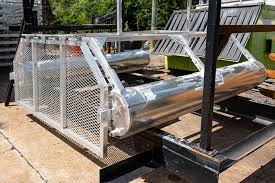
TENNESSEE VALLEY-Trash Trouts, despite their name, aren’t garbage-gobbling fish.
They’re large aluminum devices that resemble the top of a dune buggy frame. Floating on pontoons and tethered to riverbanks, they work around the clock to keep streams clean.
Fish and aquatic creatures swim through. Trash gets trapped.
The Tennessee Valley Authority has partnered with Asheville GreenWorks to install three new devices on tributaries that feed into the French Broad River around Asheville, NC, and ultimately into the Tennessee River.
Across the Valley region, TVA partners with local organizations, reservoir and river groups and local governments to clean and prevent litter in rivers that form the Tennessee River watershed. Keep the Tennessee River Beautiful, WaterWays, Tennessee RiverLine and many more groups have hauled millions of pounds of trash from waterways over the past decades.
All these partnerships help TVA fulfill its mission of Environmental Stewardship while building community, and in this case, bolstering the economy in an area hit hardest by Hurricane Helene.
“We work with local businesses to build the Trash Trouts, and with cities and counties to install them,” Eric Bradford, Asheville GreenWorks director of operations, said.
“It’s a good idea,” Billy Duncan, welder at Duncan Welding, which fabricates the structures, said. “It’s good for the environment, and it’ll catch on.”
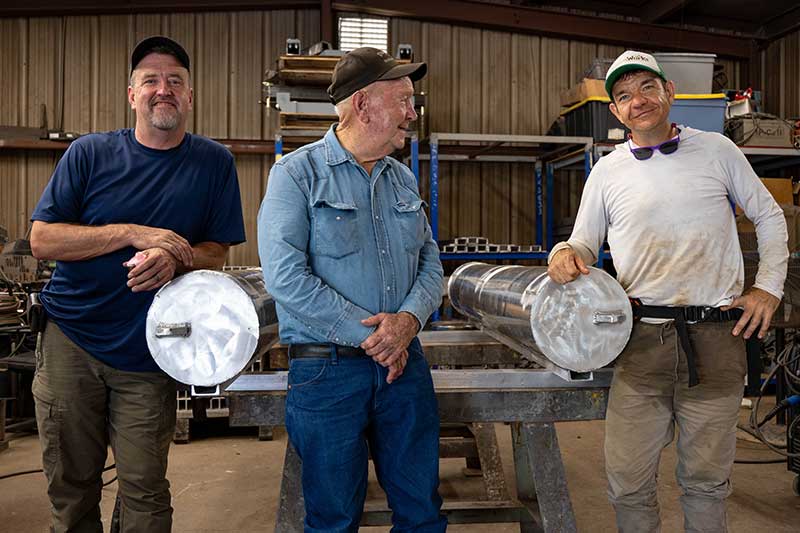
TVA partnered with Asheville GreenWorks and Duncan Welding to build and install custom-made Trash Trouts to clean Western North Carolina rivers and streams. Billy Duncan, left, and his father, Joe, joined Eric Bradford, right, of AshevilleGreenworks to work with TVA.
The Ultimate Test
While aluminum is lighter than other metals, it’s strong enough to withstand the harshest storms. That included Hurricane Helene in 2024.
“If we know a storm is coming, we put the Trash Trout into ‘neutral’ and flip the gate up,” Bradford said.
That helped every Trash Trout survive Hurricane Helene, although one washed onto a two-story roof when its attachment cables snapped. “That was a test,” Duncan said. “We were glad to know that the cables gave before the trap did.”
It’s very rare that a storm of that magnitude roars through these rivers. But Helene has renewed TVA’s and its partners’ commitment to keeping these rivers clean.
“Every 3 to 4 weeks, volunteers clean the Trash Trouts,” Bradford said. “We wade out with a grabber and, in 30 minutes, recover an average of 16 pounds of dry, man-made trash.”
That includes plastic drink bottles, Styrofoam, cigarette butts, kids’ toys and glass bottles, among other debris. “It’s all stuff that can be blown out of the back of dump trucks or that rain washes into streams from land,” Bradford said.
In the past couple years, the traps also caught hurricane debris: shingles, metal and more slowly eroding from riverbanks.
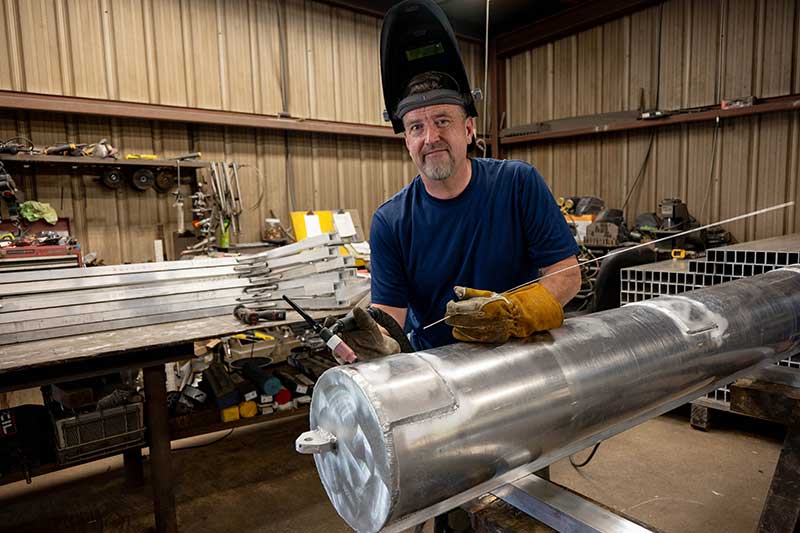
Billy Duncan of Duncan Welding works on a Trash Trout.
Going to the source
Quantifying trash can help local city and county governments meet their stormwater management goals, which means limiting what washes into the river.
Working with local governments and preventing litter throughout the Valley is key to helping TVA keep streams that then flow into mainstream rivers — and ultimately through its dams and reservoirs — safe.
“Trash Trouts allow the community to start an upstream conversation,” Bradford said. “Where is the trash coming from? Can we stop it before it ends up in the river? Then we talk to cities and counties about what they need.”
That’s meant moving dumpsters out of floodways. Adding more trash cans to parks and public areas. Hosting community cleanups to help neighbors unable to afford or manage it themselves.
It’s a lesson that could be applied across the Valley region, thereby helping organizations and local governments target the sources of pollution before it ever reaches the water.
“When we started this in 2015, I heard the exhaustion from volunteers,” Bradford said. “They said, ‘We’ve cleaned up this creek so many times.’ It took years — permitting, design, changing people’s minds. But now, we’re there.”
As TVA has helped Asheville GreenWorks place its sixtieth Trash Trout across seven Southeastern states, it’s clear the Trash Trouts — just like river cleanups by boat and from shore that TVA partners to make happen across the Valley — work.
“And it’s not like it’s an eyesore,” Duncan said, squinting at the shining metal frame.
Bradford nodded. “It’s beautiful.”

