
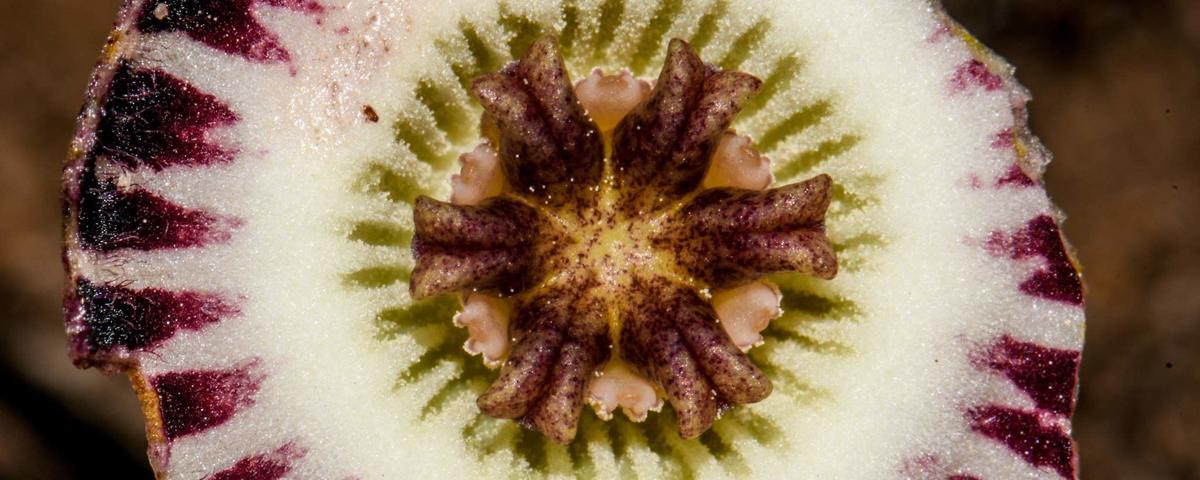
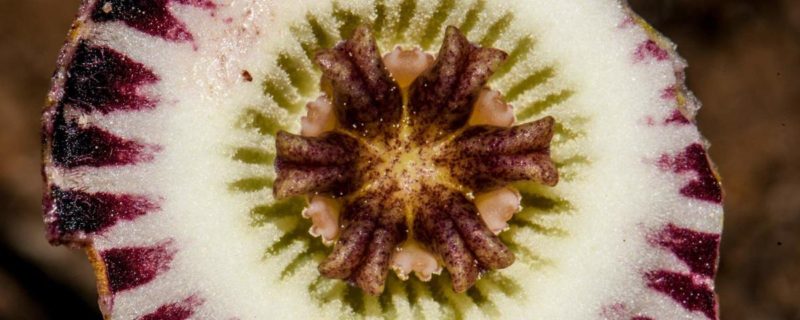
 TENNESSEE VALLEY-Walking in the deep woods of Alabama, Brian Finzel was planning to capture photos of what he thought was a common plant species…until he examined an unusual bloom in a patch of Hexastylis, commonly known as wild ginger.

Brian Finzel
As a professional plant life photographer and teacher of Biology at St. John Paul II Catholic High School in Huntsville, Alabama, Finzel travels around the country to observe and document various species. In April 2019, his travels kept him close to home, looking for interesting plants near TVA’s Guntersville Dam.
“I was looking for another species of wildflower that’s well known in Tennessee and some parts of Alabama,” Finzel says. “In doing so, I stumbled across a patch of ginger that looked unfamiliar. I went to examine the only open bloom that I saw and thought, ‘what is that?’.”
From past experiences with unfamiliar plant life, Finzel immediately reached out to his friend, Brian Keener– a botanist and professor of Biological Sciences at the University of West Alabama.
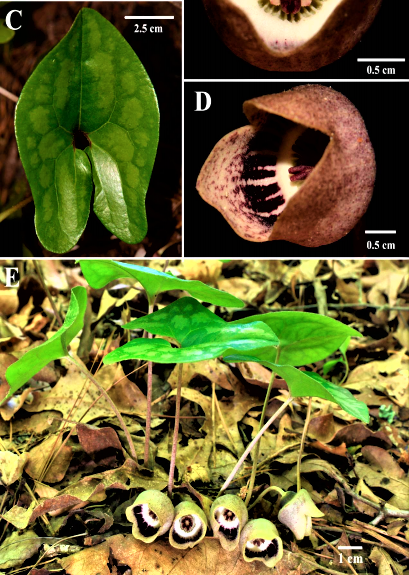 “I knew that unless this was one of those weird cases where the species had jumped from North Carolina or something, nothing like this was supposed to be in our area,” Finzel says. “I took a picture with my phone and sent it to Keener, and he replied instantly by saying, ‘yeah, that’s new.’”
“When I saw the picture Finzel sent my way, I was shocked,” Keener says. “Not only had he discovered a state-record plant, but a world-record plant — a species that’s never been documented anywhere until now.”
Before Keener and Finzel could begin the process of describing it as a new species, Keener had to observe it in person. With the help of Finzel, Keener visited the new ginger’s site to gather information and photos. He was able to inspect the smaller of the world’s only two known populations — 200-300 and 1,000 plants respectively — as the larger population was discovered by two other biologists a year later.

Brian Keener
In honor of Finzel’s discovery, the plant was described and named as Finzel’s Ginger, or Hexastylis finzelii in the Journal of the Botanical Research Institute of Texas (read the plant registration).
What’s the Difference, and Why Now?
Finzel and Keener both note that the ginger’s populations are well-established but, with no defining features that differentiate it from other Hexastylis species other than its flower, it had yet to be discovered.
“Because the species is closely related to common wild ginger, also known as Little Brown Jugs, the leaves look the same,” Keener says. “So, unless the flowers are in bloom, you can’t tell the difference.”
Finzel agreed, noting that the flowers are also hard to see because they’re hidden under the leaf litter
“What’s amazing is that most of the new plant species that are being found are in rain forests, or maybe there’s a new species of grass that’s been overlooked —but to find a new species that’s this showy in the United States is extremely unusual,” he says. “The flowers are much larger than that of Little Brown Jugs and open farther as well. They bloom underneath the leaf litter and are believed to be pollinated by beetles, so unless you’re a wildflower enthusiast or botanist you wouldn’t know to look for them.”
“This was a right-place-at-the-right-time kind of moment,” Keener says. “If Finzel had been a few days earlier, he might have missed the bloom and species entirely.”
He also commented on the important role that cell phones are playing in helping biologists and botanists identify, protect and preserve new and existing plant life.
“The instancy of cell phones and text that day really helped us in identifying the species,” he says. “Plant identification apps are now even helping botanists to locate new populations of current species as users document them — it really is amazing.”

Heather Hart
Enhanced Protection
According to Heather Hart, TVA senior specialist Natural Resource Conservation and Joshua Burnette, TVA senior specialist Natural Resources, the Finzel’s Ginger will have more protection now that it’s been officially described and found on TVA property, but they still need help from visitors to ultimately preserve the populations.
“We do everything we can to manage habitat and invasive species so that local species can thrive, but habitat and population loss often occurs from people uprooting plants and taking them home, private landowner encroachment on TVA lands — which is illegal on federal property — and people leaving the trails,” Hart says. “We can’t protect every area on our own, so it’s important that visitors know the responsibility that they have: to leave things better than they found it.”
Burnette agreed, noting that hiking and biking can be destructive activities if not kept to the designated trails.
“No one wants to hike or bike in a Walmart parking lot — we need nature for that and it’s for everyone to enjoy,” he says. “Sometimes there are species like this one that surprise even the professionals, which is a good reminder to always stay on the guided trails so that you don’t damage habitat and possibly eliminate unknown or rare species like Finzel’s Ginger.”
As the new species gains recognition in the world of biology and plants, Finzel and Keener hope to have it listed under the Endangered Species Act for further protection. But Finzel admits he’s glad for its current location in the meantime.
“We’re eager to see this plant under the ESA— and it just might be someday,” Finzel says. “Until then, we’re happy it’s living on federal land and monitored by TVA.”
Media Release/TVA Newsroom

