
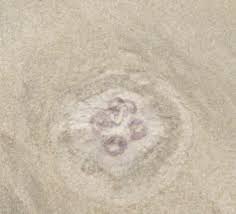
While we humans can quite happily sit out in the sun for hours (with adequate sun protection, of course), jellyfish can disappear completely if washed ashore on a sunny day. This is because a jellyfish’s delicate body is composed of at least 95% water, unlike the human adult body, which is about 60% water.
As you may suppose, jellyfish are jellylike in consistency — at least when well hydrated — but they aren’t actually fish. They are in fact plankton, ranging in size from less than an inch to nearly 8 feet long, with tentacles that can measure an impressive 100 feet or more. (The largest jellyfish is longer than a blue whale.) Jellyfish have no bones, no brain, and no heart, and they use only rudimentary sensory nerves at the base of their tentacles to detect light and odors.
Due to their structure and exceptionally high water content, jellyfish can evaporate within hours in a process known as deliquescing if they’re stranded on a beach in the sun. The jellyfish shrinks as its water evaporates away, leaving behind nothing but a faint imprint on the sand.
Media Release/InterestingFacts

